Manual.ly Logo

AVA GO P40 Instrukcja-Obslugi

0,0 · 0 Oceny

Instrukcja PDF · 42 Strony

Polski

M: QW-35-FL
strona

/ 42

Loading...
561266bd018a42911edd2881aa982d125812 page 4
6 7
should only be done by qualified service personnel.
Replacement parts for a double-insulated product
must be identical to the original parts. A double-
insulated product is marked with the words
“Double Insulation” or “Double Insulated”. Product
may also be marked with symbol shown below.
Unpacking & Preparation
Instructions
After unpacking the high pressure washer, lay out
the parts and accessories. Familiarize yourself with
the parts in the package by comparing them to
those listed on the box and attached documents.
If assembly is required, refer to the attached
assembly instructions.
Water Inlet Connection
Attach the included water inlet filter as shown in
illustration A, hand tightening is enough. Never
use a standard inlet connector without water filter.
Attach your garden hose to the filter connector. The
included water filter fits standard quick connectors
for garden hoses (Gardena).
High Pressure Hose
Ensure that there is no visible damage of the
high-pressure hose, and connect it to the female
connector on the machine as shown in illustration
B. Connect the other end into the high-pressure
gun as shown in illustration C. One or both of
these connections may already be connected from
the factory. If both ends look the same, the hose
can be used in either direction. Make sure the hose
clicks into place and is securely fastened.
High Pressure Gun
After connecting the pressure gun to the hose, test
the trigger and safety lock. Open the water outlet
valve going into the machine, and make sure there
are no leaks. No water should be able to escape
the water inlet connector, machine, high-pressure
hose or high-pressure gun. Make sure the safety
lock/child proofing works, as shown in illustration
D. It should not be possible to suppress the trigger
while the safety lock is engaged. Unlock the safety
and suppress the trigger until there is a steady and
even water stream from the gun.
Spray Gun, Lance and Accessories
The pressure washer is meant to be used with
accessories mounted on the pressure gun.
All accessories are attached using a bayonet
connector. Push the bayonet end into the female
bayonet connector, twist counterclockwise and let
go. Ensure that the accessory is securely fastened.
Refer to illustration E. All accessories, except for
accessories using pinpoint nozzles (for instance
the turbo nozzle) can be attached directly on the
gun. For safety reasons, accessories that use
pinpoint nozzles (for instance the turbo nozzle), are
only to be used with included lance(s), see figure
F. This is due to safety regulations that dictate a
minimum distance between the handle and harmful
water jets. One or more of the pictured nozzles are
included as standard.
Test and Startup
Plug the power cable into an approved power
outlet. To the extent possible, AVA recommends
using a pressure hose extension (not included)
rather than using a power cord extension. If an
extension cord is used, it must be approved for
outdoor use, and the cross section of the cord
needs to be minimum 1.5 mm2 on up to a 10m
cord, and minimum of 2mm2 from 10m to 20m
cords. Never use a cord that exceeds 20m. Ensure
that the safety lock on the trigger is engaged.
Turn the power switch on the machine to “1,” see
illustration G. The machine has the international
symbols “0” for off, and “1” for on. The machine
should make a short motor sound, and quickly
stop. Direct the pressure gun in a safe direction,
disengage the safety lock and suppress the trigger.
The machine will now start, and there might be a
noticeable kick-back/movement in the gun. Every
time the trigger is released, the machine should
quickly stop.
Familiarize yourself with the different pressure
nozzles and the water jets they deliver. The
relation between power, work area and distance is
explained in illustration H.
Operating Instructions
Consider the user manual and warnings and use
common sense. There are different opinions on
what can be cleaned using high pressure, but
from our experience, common sense will get you
a long way. Illustrations H and I show some of the
possibilities and areas of use, but we recommend
also visiting our website for more information.
Remember that the water force decreases while
the contact area increases with larger surface
distance. Remember to always engage the safety
lock while not holding the pressure gun and follow
the “after use” instructions before storing the
machine. If the motor turns on for short periods,
this is completely normal. The pump is priming
itself to be ready to go for when the pressure gun
trigger is suppressed. Turn the pressure washer
off, if not used for periods longer than 5 minutes.
Do not press the trigger several times in quick
succession, as this can cause the total stop system
to malfunction. Squeeze the trigger slowly and
methodically. The O-rings inside the bayonets and
extension lances should be cleaned regularly and
lubricated using grease or silicone-based lubricant.
For instructions on extra accessories, purchased
separately or bonus items, go to the AVA website:
www.discoverava.com
Packing and storage
When you are finished using the machine, do
the following: Engage the safety switch on the
pressure gun. Turn the power switch on the
machine from 1 to 0 and turn off the water flow
from the faucet. Disengage the safety switch
and press the trigger to release the remaining
high pressure. Be aware that the system still is
pressurized up to this point and be sure to point
the spray in a safe direction. Disconnect the
garden hose and detach nozzle and/or lance from
the gun. Press the trigger once again. Some water
may exit the water inlet connection or the gun.
Finish by engaging the safety switch on the gun
and disconnect the power plug.
Store the machine and accessories in an
environment that has no risk of freezing
temperatures. If this presents a challenge, follow
the instructions for freeze protecting the machine
on the AVA website: www.discoverava.com
Good luck with your new pressure washer. We
hope that it will provide satisfaction for years to
come, whether you love cleaning, or want to get
things done quickly. In both cases you have made
the best possible decision in buying an AVA.
General Tips
•
Firstly, the best advise we can give is to visit
www.discoverava.com to learn more about
your pressure washer, as well as techniques,
accessories, etc.
•
Clean from the bottom up. This helps you see
what you have cleaned and ensures that you don’t
rinse away cleaning agents before you actually
clean. Finally, rinse from the top down. This tip
applies to almost everything you would want to
clean.
•
Do not store the pressure washer near heaters
or other heat sources, as this could cause the
gaskets inside the pump to dry out.
•
Remember: There will always be residual water
left in the pump. Water that dries up over time
could leave lime or humus behind, which can get
stuck in the movable parts of the pump. A pressure
washer that gets used regularly will normally last
longer than one that only sees use once every year.
•
If the machine is to be stored for extended
periods without being used, we recommend
following the guidelines for long-term storage
found on www.discoverava.com
•
The filter on the water inlet connector should
be cleaned regularly. Push a pen or pencil into
the smallest opening in the detached connector
and push the filter out. Rinse in clean water and
reassemble.
•
Familiarize yourself with all documentation in
the box, and also check www.discoverava.com
regularly, if you are interested in new products or
accessories for your pressure washer.
How to Avoid Damaging Surfaces
Damage to surfaces being cleaned occurs
because the impact force of the water pressure
exceeds the durability of the surface. Bare wood
can be penetrated; paint can be peeled off, etc.
You can vary the force of your power washer by
controlling:
- the angle of the water spray to the surface being
cleaned
- the distance of the nozzle from the surface being
cleaned
Never use a narrow high-pressure stream of water
from the lance on soft surfaces susceptible to
damage.
3rd Party Equipment
If you want to use equipment from another
pressure washer or manufacturer, be aware of the
following:
•
For accessories to be compatible they need to
be fitted with the same bayonet connection that
AVA uses. Compare the accessories and never
try to attach equipment that appears significantly
different.
•
Low-pressure equipment, such as waterflow
brushes, rim brush etc. can be used regardless of
AVA model, as long as the bayonet adapter can be
attached to the lance.
•
High-pressure equipment, such as fixed nozzles,
rotating nozzles, patio cleaners etc. all have
nozzle openings that are adjusted for machine
specifications. It is important not to mix accessories
made for differently specified machines. A general
guideline is to compare the specified wattage of
the machine that the accessory is meant for with
the wattage of the machine you wish to use. If they
are approximately the same, you can generally use
the equipment interchangeably.
•
If the machine is pulsing (turns quickly on and off
while spraying), the accessory cannot be used.
•
Some pressure guns use the same hose
connection as AVA. If a pressure gun fits the hose
of your AVA pressure washer, it can be used as
an adapter for other accessories. You still have
to follow the above guidelines, and AVA original
accessories will always be the best choice.

Rozmawiaj z instrukcją obsługi AVA GO P40 dzięki AI

Otrzymuj natychmiastowe odpowiedzi AI z instrukcji obsługi AVA GO P40

Zapytaj o AVA GO P40. Odpowiedzi pochodzą z tej instrukcji, wraz ze stronami, na których są oparte.

GO P40 Harmonogram konserwacji

Regularnie
Sprawdź wąż wysokociśnieniowy pod kątem uszkodzeń

Regularnie sprawdzaj wąż, aby upewnić się, że nie jest przecięty ani uszkodzony. W przypadku uszkodzenia wymień go na nowy, ponieważ nie można go naprawić.

Pokaż w instrukcji (strona 3)
Regularnie
Wyczyść i nasmaruj pierścienie uszczelniające typu bayonet

Regularnie czyść pierścienie uszczelniające (O-ringi) w złączach bagnetowych i przedłużkach oraz smaruj je za pomocą smaru lub środka poślizgowego na bazie silikonu.

Pokaż w instrukcji (strona 4)
Regularnie
Wyczyść filtr wlotu wody

Wciśnij długopis w najmniejszy otwór odłączonego złącza, aby wypchnąć filtr. Opłucz go w czystej wodzie i zamontuj ponownie.

Pokaż w instrukcji (strona 4)
M: qwen/qwen3.8-flash

Zadaj Pytanie

0/1000

Czy polecasz GO P40?

Tak Nie

Najczęściej zadawane pytania

A

Dzieci nie powinny uruchamiać maszyny. Muszą być ściśle nadzorowane przez dorosłego, jeśli są w pobliżu urządzenia, aby uniknąć obrażeń od silnego strumienia pod wysokim ciśnieniem.

Czy ta odpowiedź była pomocna?

A

Nigdy nie używaj gorącej wody przekraczającej czterdzieści stopni Celsjusza. Użycie wody cieplejszej spowoduje przegrzanie i trwałe uszkodzenie elementów pompy wysokociśnieniowej.

Czy ta odpowiedź była pomocna?

A

Poruszaj, skręcaj lub ciągnij gumową osłonę w dół, aż metalowy czubek będzie całkowicie widoczny. Włóż końcówkę węża do pistoletu opryskiwacza, aż kliknie się na miejscu.

Czy ta odpowiedź była pomocna?

A

To normalne zachowanie. Pompa sama uruchamia się przez jedną do dwóch sekund, a następnie się wyłącza, czekając na naciśnięcie spustu, aby w pełni aktywować silnik.

Czy ta odpowiedź była pomocna?

A

Tylko jeśli posiadają ten sam typ połączenia bagnetowego. Akcesoria wysokociśnieniowe muszą pasować do specyfikacji maszyny, aby zapobiec pulsowaniu lub awarii.

Czy ta odpowiedź była pomocna?

A

Czyść filtr regularnie. Wciśnij długopis do otworu złącza, aby go usunąć, przepłucz w czystej wodzie i ponownie zmontuj, aby zapewnić prawidłowy przepływ.

Czy ta odpowiedź była pomocna?

A

Nie. Jest to urządzenie z podwójną izolacją oznaczone symbolem podwójnej izolacji, nie wymagające środków uziemienia do bezpiecznej pracy.

Czy ta odpowiedź była pomocna?

M: QW-35-FL

Zalety i Wady

Zalety

  • Technologia podwójnej izolacji usuwa potrzebę uziemienia w celu zwiększenia bezpieczeństwa użytkownika.
  • Zawiera specjalny filtr wlotu wody, aby chronić pompę przed zanieczyszczeniami.
  • Wydajny silnik czyszczący zapewnia wyższą wydajność niż urządzenia o podobnych specyfikacjach.
  • Wyraźny mechanizm blokady spustu zapobiega przypadkowej aktywacji w celu bezpieczeństwa dzieci.
  • Kompleksowa instrukcja poprowadzi użytkowników przez kroki montażu i rozwiązywania problemów skutecznie.
VS

Wady

  • Ścisły zakaz używania gorącej wody przekraczającej czterdzieści stopni Celsjusza, aby uniknąć uszkodzenia pompy.
  • Przedłużacze ograniczone do maksymalnie dwudziestu metrów, aby zapobiec problemom elektrycznym.
  • Pompa uruchamia się i zatrzymuje się często, jeśli spust nie jest przytrzymywany przez dłuższe okresy.
  • Wymaga przechowywania wewnątrz, aby zapobiec uszkodzeniom mrożenia podczas miesięcy zimowych.
  • Wymiana dyszy może być wymagana, jeśli powierzchnie wyglądają na uszkodzone ze względu na ciśnienie.
M: QW-35-FL

Produkt Specyfikacja

Tryb pracy

Woda zimna

Moc

1700 W

Ciśnienie

Maks. 120,00 bar

Przepływ

Maks. 6,51 l/min

Temperatura zasilania

Maks. 40°C

Mobilność

Rączka do przenoszenia

Zbiornik paliwa

Nie

Masa

6,30 kg

M: QW-35-FL

Opis Produktu

Przegląd Mocy Czyszczącej

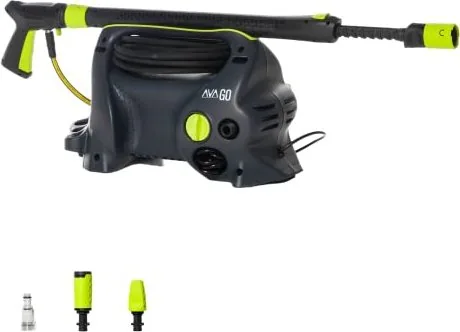
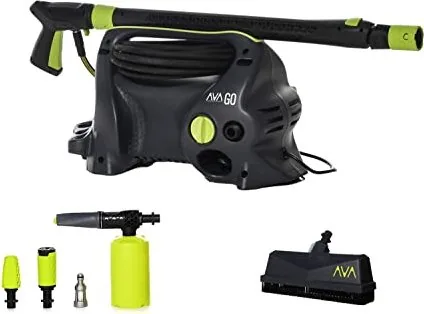
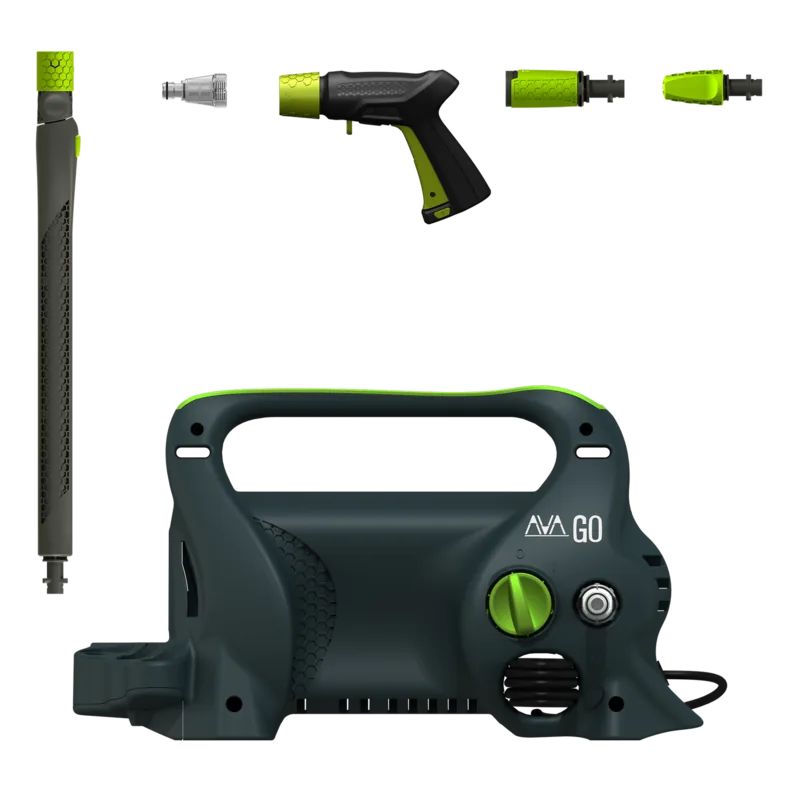
Odkryj moc czyszczenia z elektryczną myjką ciśnieniową AVA GO P40. To urządzenie reprezentuje zaawansowaną inżynierię zaprojektowaną, aby uprościć zadania związane z pielęgnacją na zewnątrz, zapewniając wyjątkową wydajność. Gdy posiadasz tę maszynę, rozumienie jej możliwości poprzez Instrukcję obsługi elektrycznej myjki ciśnieniowej AVA GO P40 zapewnia bezpieczną i skuteczną obsługę od pierwszego dnia. Jednostka jest wyposażona w niezbędne akcesoria, w tym wąż wysokociśnieniowy, pistolet strzykowy, lancę i dyszę oraz specjalny filtr wlotowy do węży ogrodowych. Bezpieczeństwo pozostaje priorytetem w procesie projektowania. Użytkownicy mają przypomnienie o noszeniu ochrony oczu i unikaniu skierowania silnego strumienia w stronę ludzi, zwierząt lub urządzeń elektrycznych. System działa dzięki technologii podwójnej izolacji, która eliminuje konieczność uziemienia, zwiększając bezpieczeństwo użytkownika podczas pracy w wilgotnych warunkach.

Instrukcja Montażu i Użycia

Konfiguracja urządzenia wymaga starannej uwagi. Zawsze zamontuj dołączony filtr wlotu wody przed podłączeniem węża ogrodowego, aby zapobiec dostaniu się zanieczyszczeń do pompy. Upewnij się, że wszystkie połączenia klikają się bezpiecznie, aby uniknąć przecieków podczas pracy. Testowanie powierzchni wcześniej na mniej widocznym obszarze pomaga określić odpowiednią odległość i ustawienie ciśnienia potrzebne dla różnych materiałów. Regulacja kąta i odległości dyszy pozwala na uzyskanie różnego poziomu siły odpowiedniego dla delikatnego malowania versus uporczywego brudu. Nigdy nie używaj wody gorącej przekraczającej czterdzieści stopni Celsjusza, ponieważ może to uszkodzić elementy pompy wysokociśnieniowej wewnętrznie. Ciśnienie wody nie powinno przekraczać siedmiu barów z sieci wodociągowej, aby zachować integralność. Czyść od dołu do góry, aby wyraźnie widzieć postęp. Płucz od góry na dół na końcu. Prawidłowe przechowywanie obejmuje trzymanie maszyny w pomieszczeniach, z dala od temperatur poniżej zera, aby zapobiec rozszerzeniu się wody wewnątrz, które mogłoby trwale zniszczyć jednostkę.

Wskazówki Dotyczące Konserwacji

Konserwacja odgrywa kluczową rolę w długowieczności. Regularnie czyść uszczelki w bagnetach i rurach przedłużających za pomocą smaru lub smaru silikonowego, aby zapewnić płynne połączenia. Sprawdzaj przewód zasilający i wąż wysokociśnieniowy przed każdym użyciem pod kątem oznak zużycia lub uszkodzeń. Jeśli przedłużacz stał się konieczny, sprawdź, czy spełnia on specyfikacje zewnętrzne dotyczące grubości przekroju i limitów długości nieprzekraczających dwudziestu metrów. Pompa sama uruchamia się, gdy spust jest naciśnięty, wskazane krótkie dźwięki silnika podczas startu. Unikaj zostawiania urządzenia bez nadzoru podczas włączonego zasilania i zawsze zwalnij pozostałe ciśnienie po zakończeniu pracy, kierując pistolet bezpiecznie i pociągając spust. Odwiedź oficjalną stronę internetową, aby uzyskać dodatkowe porady dotyczące technik i kompatybilnych akcesoriów, aby zmaksymalizować swoje doświadczenie czyszczące z tym niezawodnym narzędziem zaprojektowanym na lata satysfakcji. Nie przechowuj w pobliżu grzejników, aby chronić uszczelki przed wysychaniem w czasie.

M: QW-35-FL

© Copyright 2026 Manual.ly