Manual.ly Logo

Moldex Series 9000 EasyLock Instrukcja-Obslugi

0,0 · 0 Oceny

Instrukcja PDF · 44 Strony

Polski

M: QW-35-FL
strona

/ 44

Loading...
4059dcbd114d49994f910f96f037830bf142 page 5
3
GB – Instructions for Series 9000 Masks
Important Information for Users
This manual is only valid in conjunction with the instruction manual for Moldex Series
7000/9000 gas and particulate filters. Failure to comply with these instructions on
how to use the product and failure to wear the respiratory protection in the polluted
area may negatively impact on the health of the user and lead to permanent damage
and life-threatening injuries.
• This breathing apparatus does not supply oxygen (02) • Only use the product in ad
-
equately ventilated areas,(19.5 Vol.-% oxygen) • The mask and filters must be selected
in accordance with the pollutant type and concentration (see Table 2). • In the case
of gases with insufficient warning properties, filters may only be used if special usage
policies are specified for this purpose. • If the conditions are uncertain or changeable,
self-contained breathing apparatus must be worn. • You must exit the working area
and replace the respirator mask immediately if: – the mask is damaged, – you expe
-
rience difficulty in breathing, – you experience dizziness or fatigue. – you can taste
or smell hazardous substances or if you experience irritation • Read the instruction
manual before using the mask. • The product does not contain any metallic parts that
could cause ignition in potentially explosive atmospheres. • If you have any questions
about how to use the product, please contact Moldex-Metric. • You must also observe
the relevant rules and regulations when using respiratory equipment. • Under certain
circumstances, persons with beards, long sideburns or other anomalies in the area
around the sealing lines may be unable to achieve a proper sealing fit. Spectacle
frames that extend under the sealing line will impede a proper sealing fit. • The masks
must not be modified in any way. • Users of the masks and filters must be familiar with
how to handle them correctly. • When not in use, the mask and filter must be stored in
an uncontaminated environment.
Caution: Do not use filter equipment in unventilated containers and confined spaces.
Preparations Before Using the Full-mask
The full-mask must always be checked before use. Do not use a damaged or defective
mask. Seek the immediate assistance of a supervisor.
You must check • The mask and the filters for fractures, deformations, cracks and
contamination. • Whether the head strap is torn, nicked or damaged in any other way
and whether it provides sufficient elasticity. • The inhalation and exhalation valves
as well as the sealing rings on the filter connections for contamination, deformation,
fractures and cracks. Make sure that the valves and sealing rings are fitted correctly. •
The use-by-date of the filter and their correct fitting in accordance with the instruction
manual for gas and particulate filters. Fitting/removing the full-mask (Figures 1, 2, 3
and 4) Open the straps fully at the 4 adjustment points and hold the head strap with
one hand at the bracing with the Moldex lettering. Place the opening of the head strap
at the back of the neck and pull the mask down over your face from above. At this point,
make sure that no hairs are trapped between the sealing lip and your face. Position
the mask on your face and use one hand to press the mask firmly against your mouth
and chin. Now use your other hand to pull the neck strap tight on one side and then
repeat the procedure on the other side. To ensure the best possible seal between mask
and face, you should always tighten the neck straps first. The head strap must lie flat
on your head. To ensure that the mask fits comfortably, adjust the head and neck strap
equally. Before entering your working area, check that the mask creates a seal around
the face. To remove the mask, first loosen the clips on the neck strap by pulling the mask
away from your face. Using suction to check the face seal (Figure 5) Place the palm
of your hand over the opening on the filter cover to seal it and breathe in slowly. If the
facepiece contracts slightly, the mask is correctly seated. If you notice an inflow of air,
adjust the position of the mask on your face or adjust the tension of the straps. Repeat
this check until a seal is achieved. Using excess pressure to check the face seal (Figure
6) For full-masks equipped with an EN 148-1 connection, check the face seal before
fitting the filter to the facepiece. Place the palm of your hand over the exhalation valve
and breathe out slowly. If no air escapes between the facepiece and your face, a prop
-
er sealing fit is achieved. If you notice air escaping, adjust the position of the mask on
your face or adjust the tension of the straps. Repeat this check until a seal is achieved.
Under no circumstances should you enter a hazardous area if you are unable to
achieve a proper sealing fit. Seek the assistance of a supervisor.
Maintaining the Full-mask
The maintenance intervals as set out in the national regulations must be adhered to.
The date of manufacture is shown on the inside of the face seal in the chin area.
Cleaning/Disinfection We recommend cleaning the mask after each use. If not in use,
clean the mask after 6 months at the latest. Remove the filter; clean the facepiece
with warm water (max. 50°C). If necessary, use a neutral cleaning agent and an
alcohol-based disinfectant. To clean the valve membrane, remove it from the holder.
To clean the inner mask, unfasten it from the two stop points. To refit it, use the guide
rails on the lower part of the lens and the two stop points. To dismantle the filter, refer
to the instruction manual for gas and particulate filters. After having cleaned or disin
-
fected the mask, the face seal needs to be checked by means of suitable leak testing
equipment. Before cleaning pull the protective film away from the lens Dry the mask
thoroughly before putting on a new protective film and before storing it. Storage Keep
the 9000 mask sealed in a dry, uncontaminated environment. Protect against sunlight
and sources of heat (see the "Storage" icons). The name of the wearer and a record
of the filter changes can be noted on the packaging. Caution: At low temperatures,
moisture can cause the valves to freeze up. The date of manufacture is engraved on
the inside of the mask. Calendar clocks see page 39. Exhalation Valve (Spare Part
No. 9974 [b]) Fold down the cover of the exhalation valve and check the exhalation
valve and valve seat for contamination, deformation, fractures or cracks. Replace the
valve membrane when necessary, or every 4 years at the latest. Please note date of
replacement. Inhalation Valve (Spare Part No. 9974 [a]) Check the inhalation valve
on the inner mask and on the inside of the filter connection for contamination, defor
-

Rozmawiaj z instrukcją obsługi Moldex Series 9000 EasyLock dzięki AI

Otrzymuj natychmiastowe odpowiedzi AI z instrukcji obsługi Moldex Series 9000 EasyLock

Zapytaj o Moldex Series 9000 EasyLock. Odpowiedzi pochodzą z tej instrukcji, wraz ze stronami, na których są oparte.

Series 9000 EasyLock Harmonogram konserwacji

Przypomnij mi, kiedy nadejdzie termin konserwacji
Co 6 miesięcy
Czyszczenie nieużywanej maski

Jeśli maska nie jest używana, czyść ją co najmniej co 6 miesięcy, aby zapewnić higienę i funkcjonalność.

Pokaż w instrukcji (strona 5)
Co 4 lata
Wymiana membrany zaworu wydechowego

Wymień membranę zaworu wydechowego w razie potrzeby lub najpóźniej co 4 lata. Zapisz datę wymiany.

Pokaż w instrukcji (strona 5)
Po każdym użyciu
Czyszczenie i dezynfekcja maski

Zdejmij filtry i oczyść półmaskę ciepłą wodą (maks. 50°C). W razie potrzeby użyj neutralnego środka czyszczącego/dezynfekującego na bazie alkoholu. Sprawdź uszczelkę po czyszczeniu.

Pokaż w instrukcji (strona 5)
Przed każdym użyciem
Kontrola maski i zaworów

Sprawdź maskę, filtry, paski nagłowia, zawory wdechowe/wydechowe oraz pierścienie uszczelniające pod kątem uszkodzeń, zanieczyszczeń lub deformacji przed założeniem.

Pokaż w instrukcji (strona 5)

Bezpłatne przypomnienia o konserwacji

Dopasowane do daty zakupu. Zawsze bezplatne, mozesz zrezygnowac w dowolnym momencie.

Przesylajac formularz, zgadzasz sie z polityka prywatnosci. Zrezygnuj jednym kliknieciem w dowolnym e-mailu.
M: qwen/qwen3.8-flash

Zadaj Pytanie

0/1000

Czy polecasz Series 9000 EasyLock?

Tak Nie

Najczęściej zadawane pytania

A

Nie, ten aparat oddechowy nie dostarcza tlenu. Jest przeznaczony wyłącznie do stosowania w obszarach z odpowiednią wentylacją zawierających co najmniej 19,5% objętości tlenu.

Czy ta odpowiedź była pomocna?

A

Zaleca się czyszczenie maski po każdym użyciu. Jeśli nie jest używana, musi być czyszczona co najmniej co sześć miesięcy, aby zapobiec nagromadzeniu zanieczyszczeń.

Czy ta odpowiedź była pomocna?

A

Oprawy okularowe rozciągające się pod linią uszczelniającą utrudniają odpowiednie dopasowanie uszczelnienia. Możesz użyć opcjonalnego mocowania na okulary, ale upewnij się, że rama nie narusza uszczelnienia.

Czy ta odpowiedź była pomocna?

A

Natychmiast opuść obszar roboczy i wymień maskę respiratora. Zapach lub smak substancji niebezpiecznych wskazuje na przerwanie uszczelnienia lub nasycenie filtra.

Czy ta odpowiedź była pomocna?

A

Tak, produkt nie zawiera żadnych części metalowych, które mogłyby spowodować zapłon w potencjalnie wybuchowych atmosferach, co czyni go bezpiecznym dla takich środowisk.

Czy ta odpowiedź była pomocna?

A

Wykonaj test szczelności, kładąc dłoń na otworze filtra i powoli wdychając. Jeśli maska lekko się zmarszczy, uszczelnienie jest poprawne. Alternatywnie, przykryj zawór wydechowy i delikatnie wydychaj powietrze, aby sprawdzić przecieki.

Czy ta odpowiedź była pomocna?

M: QW-35-FL

Zalety i Wady

Zalety

  • Spełnia normę EN 136:1998 CL2 dla wysokiej ochrony dróg oddechowych
  • System pasków EasyLock pozwala na szybką i precyzyjną regulację
  • Kompatybilny z szerokim zakresem filtrów cząsteczkowych P1, P2, P3 i filtrów gazowych
  • Brak części metalowych zmniejsza ryzyko zapłonu w potencjalnie wybuchowych atmosferach
  • Przezroczysta soczewka poliwęglanowa z opcjonalną integracją mocowania na okulary
VS

Wady

  • Wymaga ścisłego przestrzegania harmonogramów konserwacji w celu zapewnienia trwałości
  • Broda lub włosy na twarzy mogą uniemożliwić uzyskanie prawidłowego dopasowania uszczelnienia
  • Ramy okularów rozciągające się pod linią uszczelniającą mogą naruszyć uszczelnienie
  • Zawory mogą zamarznąć, jeśli zostaną wystawione na niskie temperatury z obecnością wilgoci
  • Wybór filtra musi dokładnie odpowiadać konkretnym typom zanieczyszczeń i ich stężeniom
M: QW-35-FL

Produkt Specyfikacja

Funkcje

Zawór, tarcza ochronna, uprząż czteropunktowa, regulowana, wymienny filtr

M: QW-35-FL

Opis Produktu

Ochrona Płuc za pomocą Respiratora Moldex Seria 9000 EasyLock

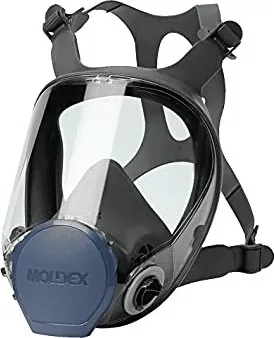
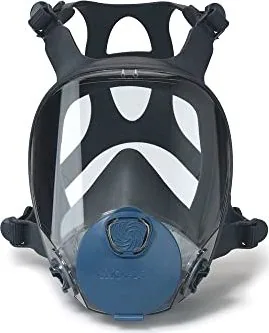
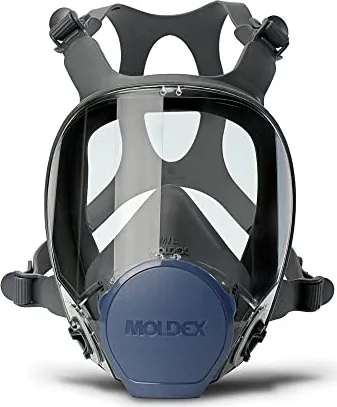
Pełna maska twarzowa z serii Moldex 9000 EasyLock stanowi szczytowe osiągnięcie w ochronie indywidualnej przeznaczonej dla wymagających środowisk przemysłowych. Ta solidna pełna maska twarzowa zapewnia kompleksową ochronę przed szeroką gamą substancji niebezpiecznych, w tym toksycznymi gazami, parami i materią cząsteczkową. Zaprojektowana tak, aby spełniać rygorystyczne normy EN 136:1998 CL2, zapewnia użytkownikom ochronę przed śmiertelnymi zanieczyszczeniami przy jednoczesnym zachowaniu komfortu podczas długotrwałego noszenia.

Jedną z wyróżniających się cech tego respiratora jest innowacyjny system EasyLock, który upraszcza proces zakładania i zdejmowania masek. Paski na głowie posiadają cztery punkty regulacji, umożliwiając dostosowanie dopasowania do różnych kształtów twarzy. Właściwe dopasowanie jest krytyczne; maska musi tworzyć szczelne uszczelnienie wokół ust i brody bez zaciskania włosów lub zakłócania oprawek okularów. Użytkownicy są proszeni o przeprowadzenie testów ciśnienia ujemnego i dodatniego przed wejściem do jakiegokolwiek obszaru zanieczyszczonego, aby zweryfikować integralność uszczelnienia.

Utrzymanie i higiena są kluczowe podczas używania ochrony dróg oddechowych. Podręcznik zaleca czyszczenie części twarzowej po każdym użyciu ciepłą wodą nie przekraczającą 50 stopni Celsjusza. Do głębszej dezynfekcji można stosować neutralne środki czyszczące oraz środki dezynfekujące na bazie alkoholu. Należy usunąć filtr, wyczyścić wewnętrzne elementy maski i sprawdzić zawory pod kątem zanieczyszczeń lub uszkodzeń przed przechowywaniem. Maskę należy zawsze przechowywać w suchym, niezanieczyszczonym środowisku z dala od bezpośredniego światła słonecznego i źródeł ciepła, aby zapobiec degradacji materiału.

Wszechstronność jest kolejnym kluczowym aspektem serii 9000. Obsługuje ona różne filtry, od filtrów cząsteczkowych P1 oferujących 4 razy większy limit narażenia w miejscu pracy (WEL) do filtrów gazowych klasy 2 zapewniających do 20 razy limit WEL lub 5000 ppm. Szczególne modele, takie jak 9004, 9005 i 9006, wykorzystują połączenie EN 148-1 do standaryzowanego mocowania filtra. Niezależnie od tego, czy pracujesz w przemyśle chemicznym, rolnictwie, czy w służbach ratunkowych, ten respirator zapewnia niezawodność niezbędną do ochrony zdrowia.

Ważne uwagi dotyczące konserwacji

Zawsze wymieniaj membranę zaworu wydechowego co najmniej co cztery lata. Regularnie sprawdzaj kubek nosowy i paski na głowie pod kątem zużycia. Jeśli maska wykazuje oznaki pęknięć, deformacji lub zanieczyszczeń, natychmiast ją wyrzuć. Nigdy nie modyfikuj struktury maski, ponieważ unieważnia to gwarancję i narusza bezpieczeństwo.

M: QW-35-FL

© Copyright 2026 Manual.ly
