Manual.ly Logo

Silverline Tools DIY 130W 421042 Instrukcja-Obslugi

0,0 · 0 Oceny

Instrukcja PDF · 48 Strony

Polski

M: qwen/qwen3.5-flash-20260224
strona

/ 48

Loading...
5cbdd1653606db39456dedc19752b2082118 page 5
DIY 130W Detail Sander421042
5
silverlinetools.com
General Power Tool Safety Warnings
WARNING: Read all safety warnings, instructions, illustrations and specications
provided with this power tool. Failure to follow all instructions listed below may result in
electric shock, re and/or serious injury.
Save all warnings and instructions for future reference.
The term “power tool” in the warnings refers to your mains-operated (corded) power tool
or battery-operated (cordless) power tool.
1) Work area safety
a) Keep work area clean and well lit. Cluttered or dark areas invite accidents.
b) Do not operate power tools in explosive atmospheres, such as in the presence of
ammable liquids, gases or dust. Power tools create sparks which may ignite the dust
or fumes.
c) Keep children and bystanders away while operating a power tool. Distractions can cause
you to lose control.
2) Electrical safety
a) Power tool plugs must match the outlet. Never modify the plug in any way. Do not use
any adapter plugs with earthed (grounded) power tools. Unmodied plugs and matching
outlets will reduce risk of electric shock.
b) Avoid body contact with earthed or grounded surfaces, such as pipes, radiators, ranges
and refrigerators. There is an increased risk of electric shock if your body is earthed or grounded.
c) Do not expose power tools to rain or wet conditions. Water entering a power tool will
increase the risk of electric shock.
d) Do not abuse the cord. Never use the cord for carrying, pulling or unplugging the power
tool. Keep cord away from heat, oil, sharp edges or moving parts. Damaged or entangled
cords increase the risk of electric shock.
e) When operating a power tool outdoors, use an extension cord suitable for outdoor use.
Use of a cord suitable for outdoor use reduces the risk of electric shock.
f) If operating a power tool in a damp location is unavoidable, use a residual current
device (RCD) protected supply. Use of an RCD reduces the risk of electric shock.
3) Personal safety
a) Stay alert, watch what you are doing and use common sense when operating a power
tool. Do not use a power tool while you are tired or under the inuence of drugs,
alcohol or medication. A moment of inattention while operating power tools may result in
serious personal injury.
b) Use personal protective equipment. Always wear eye protection. Protective equipment
such as a dust mask, non-skid safety shoes, hard hat or hearing protection used for appropriate
conditions will reduce personal injuries.
c) Prevent unintentional starting. Ensure the switch is in the OFF-position before connecting
to power source and/or battery pack, picking up or carrying the tool. Carrying power tools
with your nger on the switch or energising power tools that have the switch ON invites accidents.
d) Remove any adjusting key or wrench before turning the power tool ON. A wrench or a
key left attached to a rotating part of the power tool may result in personal injury.
e) Do not overreach. Keep proper footing and balance at all times. This enables better
control of the power tool in unexpected situations.
f) Dress properly. Do not wear loose clothing or jewellery. Keep your hair and clothing
away from moving parts. Loose clothes, jewellery or long hair can be caught in moving parts.
g) If devices are provided for the connection of dust extraction and collection facilities,
ensure these are connected and properly used. Use of dust collection can reduce
dust-related hazards.
h) Do not let familiarity gained from frequent use of tools allow you to become complacent
and ignore tool safety principles. A careless action can cause severe injury within a fraction of
a second.
4) Power tool use and care
a) Do not force the power tool. Use the correct power tool for your application.
The correct power tool will do the job better and safer at the rate for which it was designed.
b) Do not use the power tool if the switch does not turn it ON and OFF.
Any power tool that cannot be controlled with the switch is dangerous and must be repaired.
c) Disconnect the plug from the power source and/or remove the battery pack,
if detachable, from the power tool before making any adjustments, changing
accessories, or storing power tools. Such preventive safety measures reduce the risk of
starting the power tool accidentally.
d) Store idle power tools out of the reach of children and do not allow persons unfamiliar
with the power tool or these instructions to operate the power tool. Power tools are
dangerous in the hands of untrained users.
e) Maintain power tools and accessories. Check for misalignment or binding of moving
parts, breakage of parts and any other condition that may affect the power tool’s
operation. If damaged, have the power tool repaired before use. Many accidents are
caused by poorly maintained power tools.
f) Keep cutting tools sharp and clean. Properly maintained cutting tools with sharp cutting
edges are less likely to bind and are easier to control.
g) Use the power tool, accessories and tool bits, etc. in accordance with these instructions,
taking into account the working conditions and the work to be performed. Use of the
power tool for operations different from those intended could result in a hazardous situation.
h) Keep handles and grasping surfaces dry, clean and free from oil and grease.
Slipperyhandlesandgraspingsurfacesdonotallowforsafehandlingandcontrolofthetool
in unexpected situations.
5) Service
a) Have your power tool serviced by a qualied repair person using only identical
replacement parts.Thiswillensurethatthesafetyofthepowertoolismaintained.
Specic Safety
Sanding Tool Safety
WARNING!
Hold the power tool by insulated handles or gripping surfaces only, because the sanding
belt/sheet may contact its own cord. Cutting a "live" wire may make exposed metal parts of the
power tool ‘live’ and could give the operator an electric shock.
Use clamps or another practical way to secure the workpiece to a stable platform. Holding the
workpiece by hand or against the body makes it unstable and may lead to loss of control.
• Recommendation that the tool always be supplied via a residual current device with a
rated residual current of 30 mA or less.
• If the replacement of the supply cord is necessary, this has to be done by the
manufacturer or his agent in order to avoid a safety hazard.
a. ALWAYS wear appropriate protective equipment, including a dust mask with a
minimum FFP2 rating, eye protection and ear defenders
b. Ensure all people in the vicinity of the work area are also equipped with suitable
personal protective equipment
c. Take special care when sanding some woods (such as beech, oak, mahogany and teak),
as the dust produced is toxic and can cause extreme reactions
d. NEVER use to process any materials containing asbestos. Consult a qualied professional,
if you are uncertain whether an object contains asbestos
e. DO NOT sand magnesium or alloys containing a high percentage of magnesium
f. Be aware of paint nishes or treatments that may have been applied to the material
that is being sanded. Many treatments can create dust that is toxic, or otherwise harmful.
If working on a building constructed prior to 1960, there is an increased chance of encountering
lead-based paints
g. The dust produced when sanding lead-based paints is particularly hazardous to children,
pregnant women, and people with high blood pressure. DO NOT allow these people near to
the work area, even if wearing appropriate personal protective equipment
h. Whenever possible, use a vacuum dust extraction system to control dust and waste
i. Be especially careful when using a machine for both wood and metal sanding.
Sparks from metal can easily ignite wood dust. ALWAYS clean your machine thoroughly to
reduce the risk of re
j. Empty the dust bag or container (where applicable) frequently during use, before taking
breaks and after completion of sanding. Dust may be an explosion hazard. DO NOT throw
sanding dust into an open re. Spontaneous combustion may occur when oil or water particles
come into contact with dust particles. Dispose of waste materials carefully and in accordance with
local laws and regulations.
k. Work surfaces and sandpaper can become very hot during use. If there is evidence of
burning (smoke or ash), from the work surface, stop and allow the material to cool. DO
NOT touch work surface or sandpaper until they have had time to cool
l. DO NOT touch the moving sandpaper
m. ALWAYS switch off before you put the sander down
n. DO NOT use for wet sanding. Liquids entering the motor housing can cause severe
electric shocks
o. ALWAYS unplug the sander from the mains power supply before changing
or replacing sandpaper
p. Even when this tool is used as prescribed it is not possible to eliminate all residual
risk factors. If you are in any doubt as to safe use of this tool, do not use it
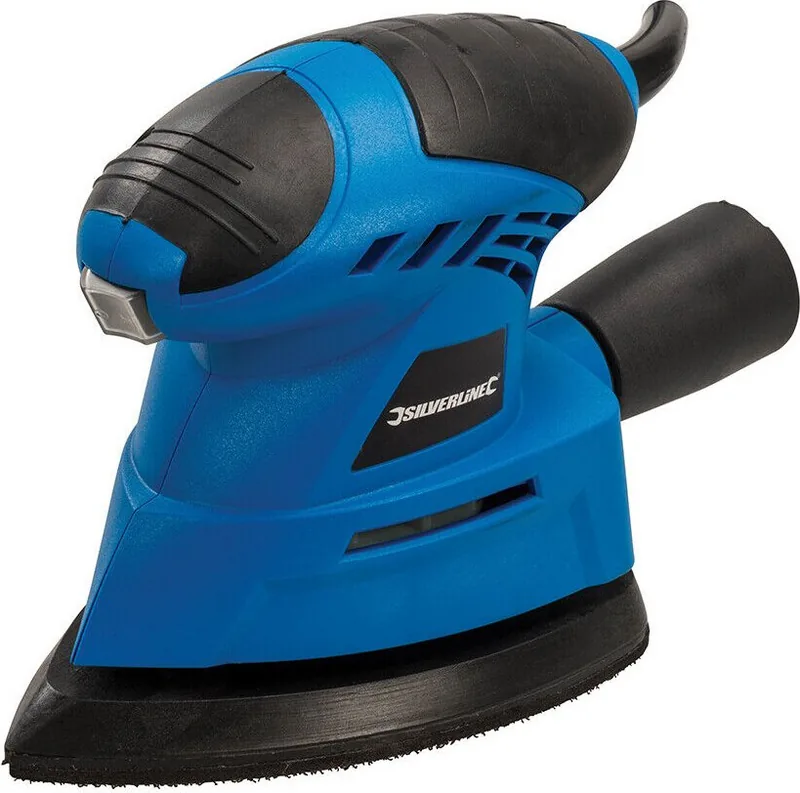
1. Palm Grip
2. Power Cord
3. Dust Outlet
4. Sanding Base Plate
5. Motor Vents
6. ON/OFF Switch
7. Dust Extraction Adaptor
8. Sanding Sheet
Product Familiarisation
421042_Manual.indd 5 28/02/2019 10:12

Rozmawiaj z instrukcją obsługi Silverline Tools DIY 130W 421042 dzięki AI

Otrzymuj natychmiastowe odpowiedzi AI z instrukcji obsługi Silverline Tools DIY 130W 421042

Zapytaj o Silverline Tools DIY 130W 421042. Odpowiedzi pochodzą z tej instrukcji, wraz ze stronami, na których są oparte.

DIY 130W 421042 Harmonogram konserwacji

Przed kazdym uzyciem
Sprawdz przewod zasilajacy pod katem uszkodzen lub zuzycia

Sprawdzaj kabel zasilajacy przed kazdym uzyciem. Naprawy musza byc wykonywane przez autoryzowany serwis.

Pokaż w instrukcji (strona 6)
Regularnie
Sprawdz dokrecenie srub mocujacych

Upewnij sie, ze wszystkie sruby mocujace pozostaja dokrecone, poniewaz z czasem moga sie poluzowac na skutek wibracji.

Pokaż w instrukcji (strona 6)
W trakcie pracy
Oproznij worek lub pojemnik na pył

Oprózniaj czesto podczas pracy, przed przerwami i po zakonczeniu, aby zapobiec zagrozeniom wybuchu wynikajacym z samospalenia.

Pokaż w instrukcji (strona 5)
Po zmianie materialu
Dokladnie oczyść maszyne

Zawsze dokladnie czyść narzedzia przy zmianie pomiedzy szlifowaniem drewna a metalu, aby zapobiec ryzyku pozaru wynikajacemu z iskier zapalajacych resztki pyłu.

Pokaż w instrukcji (strona 5)
Zawsze utrzymuj w czystości
Utrzymuj korpus narzedzia w czystości

Czyszcz miekkim pedzelkiem lub sucha szmatka. Jesli to mozliwe, uzyj sprezonego powietrza do otworów wentylacyjnych, aby zapobiec zuzywaniu wewnetrznych elementow.

Pokaż w instrukcji (strona 6)
M: qwen/qwen3.8-flash

Zadaj Pytanie

0/1000

Czy polecasz DIY 130W 421042?

Tak Nie

Najczęściej zadawane pytania

A

Musisz zarejestrować produkt na stronie Silverline w ciągu 30 dni od zakupu. Musisz wprowadzić swoje dane osobowe i informacje o zakupie produktu, aby utworzyć certyfikat PDF. Zachowaj paragon jako dowód daty zakupu.

Czy ta odpowiedź była pomocna?

A

Tak, ale musisz upewnić się, że system ekstrakcji pyłu jest czysty z pyłu drewnianego, aby zapobiec ogniom od iskier. Zawsze wyłączaj i odłącz przed wymianą narzędzia. Dokładnie czyść maszynę przy przełączaniu z drewna na szlifowanie metalu.

Czy ta odpowiedź była pomocna?

A

Zacznij z ziarnem grubym papieru około 60 ziarna dla materiału szorstkiego. Postępuj do średniego 120 ziarna dla wygładzania. Zakończ z drobnym 240 ziarna papierem dla ostatecznego wykończenia. Nie używaj arkuszy do szlifowania mokrego z tym narzędziem.

Czy ta odpowiedź była pomocna?

A

Tak. Zawsze noś ochronę oczu, maskę pyłową z co najmniej ratingiem FFP2 i ochronę słuchu. Pył z toksycznego drewna lub malowania ołowiowego wymaga surowych środków bezpieczeństwa, aby zapobiec problemom zdrowotnym.

Czy ta odpowiedź była pomocna?

A

Nie. Jeśli przewód zasilający wymaga wymiany, musi to zrobić producent lub jego agent, aby uniknąć zagrożeń bezpieczeństwa i upewnić się, że narzędzie pozostaje zgodne ze standardami bezpieczeństwa.

Czy ta odpowiedź była pomocna?

A

Sprawdź, czy otwory arkusza ściernego wyrównują się z otworami płyty bazowej. Jeśli używasz arkuszy bez wybitej dziur, musisz ręcznie wybić je w odpowiednich miejscach. Zatkane otwory również zmniejszają funkcję.

Czy ta odpowiedź była pomocna?

A

Sprawdź zasilanie, stan przełącznika i stan papieru ściernego. Jeśli przełącznik jest uszkodzony, wymień go w upoważnionym centrum serwisowym Silverline. Skontaktuj się z swoim dealerem, jeśli rozwiązywanie problemów nie powiodło się.

Czy ta odpowiedź była pomocna?

M: qwen/qwen3.5-flash-20260224

Zalety i Wady

Zalety

  • 3-letnia gwarancja pod warunkiem rejestracji produktu w ciągu 30 dni na stronie
  • Kompaktowa i lekka (0,96 kg), co ułatwia obsługę przez dłuższy czas
  • Kompatybilna z systemami ekstrakcji pyłu w celu utrzymania czystego i bezpiecznego warsztatu
  • Mocny silnik 130W z prędkością biegu jałowego 12 000 dla efektywnego usuwania materiału
  • Ergonomiczny uchwyt do ręki zapewnia pewną kontrolę podczas precyzyjnych prac detali
VS

Wady

  • Nie nadaje się do szlifowania mokrego, gdyż płyny mogą powodować poważne zagrożenia porażeniem prądem elektrycznym
  • Ekstrakcja pyłu działa poprawnie tylko jeśli arkusze wyrównują się z przedprzebitymi dziurami
  • Wysoki poziom wibracji wymaga rękawic antywibracyjnych dla bezpieczeństwa długoterminowego
  • Nie wolno szlifować magnezu ani stopów, ponieważ stanowią ryzyko pożaru lub reakcji
  • Przewód zasilający ma 1,8 m długości, co może wymagać przedłużacza dla dużych obszarów warsztatu
M: qwen/qwen3.5-flash-20260224

Produkt Specyfikacja

Typ

Szlifierka Delta

Moc

130 W

Prędkość obrotowa bez obciążenia

12 000 obr/min

Obszar szlifowania

14,00x14,00x9,00 cm (Delta)

Mocowanie

Haczyki i pętelki

Funkcje

Miękki chwyt, odssysanie pyłu

Waga

0,96 kg

Zakres dostawy

Zestaw akcesoriów

M: qwen/qwen3.5-flash-20260224

Opis Produktu

Recenzja instrukcji obsługi Silverline 130W Elektryczna Szlifierka Delta

Gdy pracujesz nad drobnymi pracami stolarskimi lub dokładnymi projektami odnowy, posiadanie odpowiedniego narzędzia jest kluczowe dla uzyskania profesjonalnych rezultatów bez frustracji. Silverline 130W Elektryczna Szlifierka Delta oferuje kompaktowe i potężne rozwiązanie dla entuzjastów majsterkowania i profesjonalistów. Ta szlifierka delta jest zaprojektowana specjalnie do zadań lekkich i średnio-dokładnych, co czyni ją idealną do szlifowania w rogach i wzdłuż krawędzi, gdzie większe szlifierki oscylacyjne nie mogą docierać. Poprzez zrozumienie instrukcji obsługi Silverline 130W Elektryczna Szlifierka Delta, użytkownicy mogą zmaksymalizować żywotność i użyteczność tego sprzętu.

Posiadając dedykowany silnik 130W, narzędzie to zapewnia wysoką prędkość obrotową bez obciążenia 12 000 obrotów na minutę. Kompaktowy projekt mierzy 160 na 100 na 130mm i waży tylko 0,96 kg, zapewniając minimalne zmęczenie podczas przedłużonych okresów użytkowania. Ergonomiczny chwyt do dłoni zapewnia pewny uchwyt, pozwalający na precyzyjną kontrolę nad trójkątną płytą roboczą. Niezależnie czy pracujesz na drewnie, plastikach lub powierzchniach malowanych, ta szlifierka dostosowuje się do różnych materiałów, zachowując gładkie wykończenie. Radzi sobie skutecznie z papierami ściernymi gruboziarnistymi, średnioziarnistymi i drobnoziarnistymi, w zakresie od 60 do 240 ziaren dla różnych etapów kompletacji.

Ekstrakcja pyłu jest krytyczną cechą tej maszyny i kluczowa dla zdrowia i bezpieczeństwa. Szlifierka zawiera wylot pyłu kompatybilny z odkurzaczami lub systemami ekstrakcji warsztatowej. Jednakże użytkownicy muszą upewnić się, że używane są arkusze ścierne z przedprzebitymi otworami, aby zbiegły się z otworami płyty roboczej, aby system działał poprawnie. Nieużycie właściwych arkuszy znacznie zmniejszy skuteczność usuwania pyłu, co może szkodliwie wpływać na zdrowie oddechowe i stworzyć bałagan w miejscu pracy. Pył z toksycznego drewna lub malowania na bazie ołowiu wymaga ścisłych środków kontroli.

Bezpieczeństwo jest nadrzędne podczas obsługi dowolnego narzędzia elektrycznego. Narzędzie emituje poziom ciśnienia akustycznego 79dB i ważone drgania 7,2 m/s do kwadratu. Wyposażenie ochronne w tym ochrona słuchu, ochrona oczu i maseczka pyłowa z co najmniej ratingiem FFP2 jest obowiązkowa podczas operacji. Użytkownicy powinni również być świadomi, że przedłużona ekspozycja na drgania może prowadzić do stanów przewlekłych jak zespół cieśni nadgarstka, więc ograniczenie czasu użytkowania jest zalecane. Wyłącz narzędzie przed odłożeniem, aby zapobiec przypadkowemu uruchomieniu.

Konserwacja jest prosta, ale wymaga dyscypliny. Regularne kontrole śrub mocujących i przewodu zasilającego są konieczne, aby upewnić, że komponenty bezpieczeństwa nie degradują z czasem. Jednostka posiada kompleksową 3-letnią gwarancję pod warunkiem rejestracji produktu w ciągu 30 dni od zakupu online poprzez stronę producenta. Ta gwarancja pokrywa wady materiałowe lub wykonawcze, ale wyklucza części zużytkowane jak papier ścierny. Zawsze odłącz od zasilania sieciowego przed zmianą papieru ściernego lub wykonywaniem zadań konserwacyjnych. Unikaj szlifowania mokrego całkowicie, gdy płyny wchodzą do obudowy silnika, co może spowodować poważne porażenie prądem elektrycznym. Dla najlepszych rezultatów, czyść otwory wentylacyjne często, aby zapobiec przegrzaniu i zapewnić stabilną prędkość.

Dodatkowo użytkownicy powinni być ostrożni przy przełączaniu między materiałami. Iskry z szlifowania metalu mogą zapalić pył drewniany, jeśli rury ekstrakcyjne nie są czyszczone dokładnie. Nigdy nie przetwarzaj magnezu ani stopów zawierających wysoki procent magnezu. Jeśli pracujesz na budynkach zbudowanych przed 1960, istnieje zwiększona szansa na zderzenie z malowaniem na bazie ołowiu, które jest niebezpieczne dla dzieci i kobiet w ciąży. Upewnij się, że wszystkie osoby w pobliżu są wyposażone w odpowiednie przyrządy ochrony osobistej. Podsumowując, ta szlifierka łączy moc z wszechstronnością w lekkim pakiecie.

M: qwen/qwen3.5-flash-20260224

© Copyright 2026 Manual.ly
